F-150 vs. RAM 1500: Which Used Truck Works Better for Eastern NC?
Posted Saturday, Nov 08, 2025
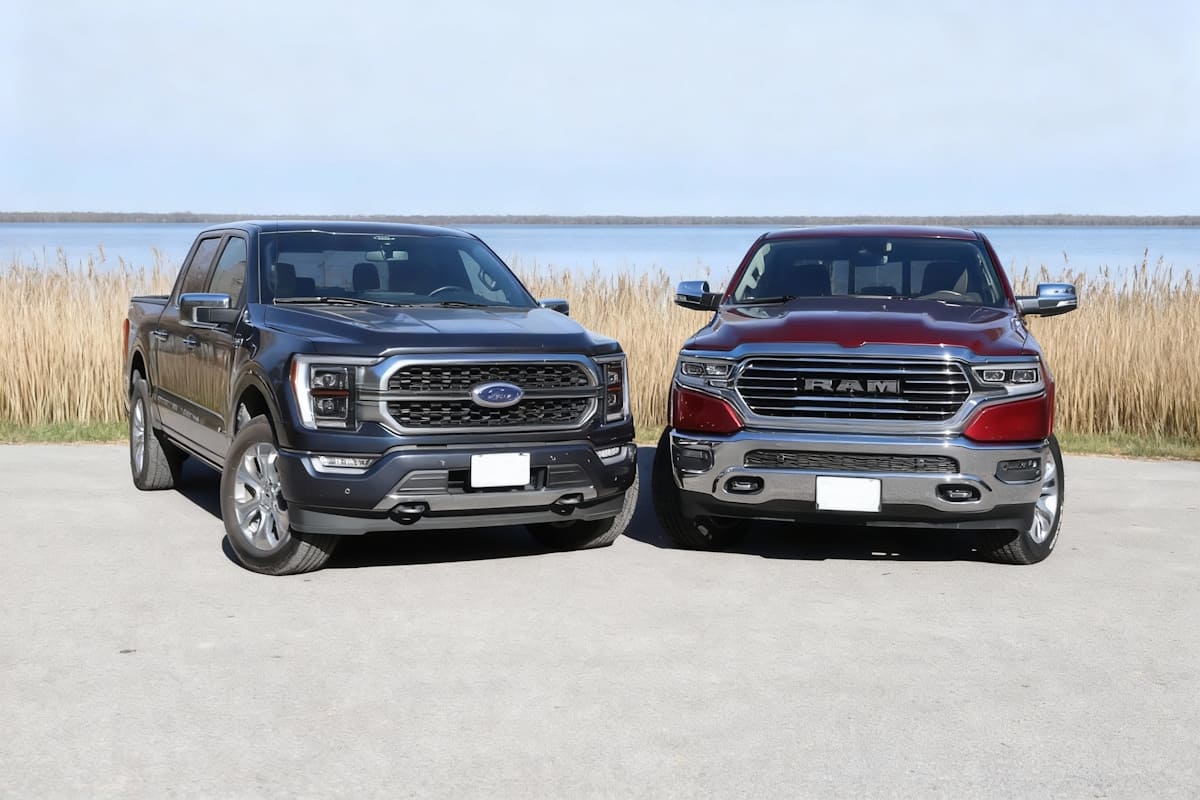
Used trucks Jacksonville NC shoppers usually narrow the field to two names fast: Ford F-150 and RAM 1500. Around U.S. 17/N Marine Blvd—between job sites in Onslow County and weekend runs to the Intracoastal—these two full-size pickups cover 95% of real needs: a comfortable ride all week, credible towing on the weekend, and ownership costs that won’t surprise you. This guide stays friendly and non-technical; where numbers matter (tow packages, brake controllers, axle ratios), we translate them into plain “does it work for my trailer?” English.
Mini-checklist (keep handy, not the whole story):
- Bring: driver’s license, insurance binder, pre-approval.
- Ask in writing: out-the-door price + tow package details.
- Test: ride comfort on patched streets, a tight U-turn, and and confirm how trailer-assist features work (on-screen explanation; no trailer hookup).
Why These Two Dominate Eastern NC Lots (What You’ll Actually See on U.S. 17)
Engines & transmissions you’ll meet most often
On local lots, F-150s commonly show up with efficient turbo V6s (strong low-rpm pull for ramps and causeways) and 10-speed autos that keep revs calm. RAM 1500s frequently pair a smooth V6 or HEMI V8 with an 8-speed that’s tuned for easy, unhurried shifts. Translation: both trucks feel relaxed in traffic; Ford leans a bit “quicker to move,” RAM leans “smoother to settle.”
Cab & bed choices (what fits your day)
Expect Crew/Quad cabs to dominate—crew space matters for contractors hauling people and families wrangling car seats. Bed lengths around 5.5–6.5 ft are the sweet spot in Jacksonville parking; they swallow coolers, toolboxes, and beach gear without making every parallel park a wrestling match. If you regularly carry ladders or lumber, check for factory bed lighting and sturdy tie-downs rather than chasing a longer bed you’ll hate downtown.
Work-friendly options that actually help
For tow ratings NC shoppers, options beat engine bragging. Look for an integrated trailer brake controller, a receiver hitch with the right class, and a cooling/tow package. Ford’s Pro Trailer Backup Assist and RAM’s camera/guide lines both reduce ramp stress; ask the salesperson to show the on-screen steps and camera guidelines (no trailer hookup at the store). Bed liner (spray-in preferred), multiple tie-points, and a 110/115V outlet are the unsung heroes for work trucks Onslow County crews—small things that save time every day.
Quick take: You’ll see tons of each truck because both balance comfort with capability. F-150 feels a touch more eager; RAM 1500 feels a touch more plush. The right pick usually comes down to cab space you need, how often you tow, and which parking-lot manners you prefer on N Marine Blvd.
Ride & Everyday Comfort (Job Sites, Base Traffic, Beach Roads)
Seat support & cabin quiet
If your week is job sites plus N Marine Blvd errands, the RAM 1500 feels a notch plusher. Its coil-spring rear (on many years) and well-padded seats soak up patched pavement on Western Blvd and base access roads, keeping the cabin calm after long days. The Ford F-150 counters with supportive seats and a slightly firmer, more controlled feel—great when the bed’s loaded or you’re cruising at U.S. 17 pace to Surf City. Noise-wise, both are civilized; RAM skews “library quiet,” Ford skews “confident and composed.”
Steering, turning, and parking
Downtown slots and big-box lots reward easy steering and good sightlines. The F-150 usually feels lighter on initial turn-in, which helps with quick U-turns or backing a trailer near a ramp. The RAM 1500 tracks like a bigger sedan—stable, predictable—so long highway stretches to Wilmington feel relaxed. For used trucks Jacksonville NC shoppers who parallel park often, wheel it through a tight three-point turn during your test: pick the one that stresses you less.
Tech & safety that matter daily
Both trucks commonly offer Apple CarPlay/Android Auto, blind-spot monitoring, and crisp backup cameras—must-haves when tool bins, coolers, and beach chairs fill the bed. Ford’s Pro Trailer Backup Assist can be a game-changer if you’re new to ramps; RAM’s surround-view/guide lines make lining up intuitive. Lane-keeping, adaptive cruise, and rear cross-traffic alert are worth prioritizing on either model if your routes include school pickup zones or crowded weekend lots.
Mini checklist (keep quick, not the whole story):
- Sit for 2 minutes engine on: seat comfort, lumbar support, idle vibes.
- Drive over a few patched sections: listen for bed squeaks or dash rattles.
- Practice a back-in and a tight U-turn: steering weight + camera clarity.
- Pair your phone: confirm calls/maps/audio work without lag.
Plain English take: F-150 = slightly firmer, more “ready to work” feel; RAM 1500 = slightly cushier, more “long-day friendly.” Your winner is the one you’d happily drive home after a 10-hour shift—before loading the cooler for Saturday.
Towing & Hauling for Eastern NC (Contractors & Weekend Boaters)
Real-world tow use in NC (ramps, causeways, job trailers)
For weekend boaters hitting the Intracoastal or New River, both trucks tow confidently, but they feel different. Ford F-150 (especially with the turbo V6) delivers easy low-rpm pull when you’re easing up slippery ramps or merging onto U.S. 17 with a single-axle boat. RAM 1500 comes off smoother and more relaxed, which many owners appreciate during long hauls to Emerald Isle or Wilmington. If your week includes a landscape or utility trailer, either works; the choice is whether you prefer the F-150’s eager surge or the RAM’s unruffled glide.
Tow ratings NC: what actually matters
Forget brochure bragging—spec sheets assume the right receiver class, axle ratio, cooling, and a legit tow package. On the F-150, look for the factory towing or max tow packages plus integrated trailer brake controller and mirror upgrades; Ford’s Pro Trailer Backup Assist can tame tight ramps fast. On the RAM 1500, confirm the hitch class, the integrated controller availability, and cooling package; RAM’s camera views/guide lines make lining up simple. For both, correct tongue weight and a properly set brake controller beat an extra 500 lbs on paper every time.
Payload & stability you can feel
Contractors tossing tools, pavers, or lumber into the bed will notice character: F-150 feels a touch more buttoned-down with weight onboard, keeping the nose steady when braking or turning across crowned side streets. RAM 1500 (many years with coil-spring rears) rides smoother unladen and stays composed when you add moderate payload; if you’re frequently at max payload, consider helper springs or load-leveling shocks either way. Tire choice and pressure matter more than people think—LT tires at proper PSI can sharpen stability with trailers for both trucks.
Tiny tow/haul cue card (keep in your pocket):
- Hitch & controller present and functional
- Mirrors/cameras you can actually see with
- Review payload/tow ratings on the door-jamb label and ask about recent brake/suspension service
- Practice a gentle incline start in a safe area (without a trailer) and a 45–55 mph brake check, if road conditions permit.
Plain take: Ford F-150 vs RAM 1500 for Eastern NC towing is less about headline numbers and more about feel: F-150 = a bit more eager and planted under load; RAM 1500 = a bit smoother and calmer mile after mile. Pick the personality that fits your trailer, your routes, and your weekends.
Ownership Costs & Reliability Signals (Onslow County Reality)
Fuel, tires, and brakes (the everyday bill)
Across mixed driving in Eastern NC—base traffic, U.S. 17 pace, and job-site crawls—both trucks return similar real-world MPG when similarly equipped. Lightly optioned F-150 turbo V6s often cruise efficiently at highway speeds; RAM 1500 V6 and HEMI MDS (cylinder deactivation on many years) even things out on longer runs to Wilmington. What you’ll feel in the wallet more often than fuel is tires and brakes: 20-inch wheels look great but cost more per tire; heavier bed setups and frequent trailer duty shorten pad/rotor life regardless of brand.
Parts, maintenance, and getting back to work
For used trucks Jacksonville NC buyers, availability matters more than brand pride. You’ll find fast access to common wear items for both Ford and RAM at local parts counters and shops, which keeps downtime low. The F-150 has a deep parts ecosystem for bed hardware, mirrors, and tow bits; RAM 1500 shines on interior trim and suspension components availability. Oil changes, filters, and basic fluids are a wash—stick to the maintenance minder and you’ll avoid most surprises.
Reliability signals to read on any truck
Skip folklore; check what’s in front of you. Consistent service records, recent brakes/tires/battery, clean CarFax/AutoCheck, and a printed recall status with “no open recalls” beat model-year stereotypes. On the test drive, note cold starts, transmission shift quality when warm, HVAC strength at idle, and any shimmy under 45–55 mph braking—those four tells cover a lot of ownership headaches.
Quick cost/reliability cue card (keep brief):
- Two keys/fobs present now (replacements are pricey)
- Recent wear items: tires (DOT ≤4 yrs), pads/rotors, battery date
- Fluids: clean oil, proper coolant color/level, no burnt ATF smell
- Paper: history report + reconditioning RO + recall printout in the folder
Bottom line for Onslow County: Daily comfort and parts access are strong on Ford F-150 vs RAM 1500 alike. If you tow or haul often, budget a little extra for tires/brakes and choose the truck whose ride + steering make long days easy. For work trucks Onslow County, that comfort is what keeps you fresh—and on weekends, it’s what makes the drive to the ramp still feel like a break.
Which Truck Fits You? – Contractor quick check
Contractor profile (tools, payload, day-to-day durability)
If your week is ladders, compressors, and a trailer a few days out of seven, the Ford F-150 often feels a hair more “buttoned-down” with weight in the bed. Steering stays steady over crowned side streets, and common tow packages with an integrated brake controller make life easier on job hops across Onslow County. RAM counters with a calmer ride when unladen—great if you split days between estimates and site runs. Pick the cabin that fits your crew and gear layout first (Crew/Quad + 6.5-ft bed is the local sweet spot), then make tow hardware the tiebreaker.
Contractor quick check (keep short): receiver + integrated controller • bed lighting + liner • tie-downs where you need them • 110/115V outlet in bed/cabin.
Family + weekend boater (comfort, cabin tech, ramp confidence)
School runs, Costco, then a skiff to the Intracoastal? The RAM 1500 leans plusher for weekday peace, while the F-150 feels a touch more eager when merging to U.S. 17 with a boat in tow. Both offer CarPlay/Android Auto, blind-spot with trailer coverage, and crisp cameras; Ford’s Pro Trailer Backup Assist is worth considering if you plan to tow; request a feature walkthrough on the lot (no trailer demo).. Your winner is the truck you’d happily drive after a long Friday—then back down a ramp on Saturday without a second thought.
Family/boater quick check: rear-seat space for car seats • camera clarity + trailer guides • hitch height matches trailer • no exhaust drone at 45–55 mph.
Year/trim value tiers (where the deals usually are)
- Budget-friendly: Older, clean XLT (F-150) or Big Horn (RAM) with tow package and two keys beats a newer base model without tow gear every time.
- Sweet spot: Mid-trims (F-150 XLT/FX4, RAM Laramie) balance comfort and options—heated seats, better audio, driver aids—without premium-trim pricing.
- Premium when it pays: If you drive long distances or tow most weekends, Lariat/King Ranch/Platinum or Limited/Longhorn levels can be worth it for quieter cabins, seat comfort, and advanced trailer tech.
Used-truck value cue card: two keys/fobs present • printed service history • reconditioning RO (brakes/tires/battery) • “no open recalls” printout • written out-the-door.
In short: For used trucks Jacksonville NC shoppers, choose by lifestyle: F-150 for a slightly more planted feel under load and sharp maneuvering; RAM 1500 for a slightly cushier daily and serene highway miles. Match cab/bed to your people and tools, insist on real tow hardware, and let a back-to-back loop on N Marine Blvd finish the decision.
People Often Ask (Jacksonville, NC)
Which truck feels less tiring after a long workday—F-150 or RAM 1500?
Most shoppers find the RAM 1500 a touch plusher and quieter, while the F-150 feels a bit more controlled and “ready to work.” If your days run long, the RAM’s cabin calm can help; if you carry tools or tow often, the F-150’s planted feel under load is confidence-boosting.
Is an EcoBoost F-150 better than a HEMI RAM for boat ramps?
For quick low-rpm pull on slick ramps, the F-150’s turbo V6 shines; the RAM’s V6/HEMI combo feels smoother on long highway stretches. If most towing is short and stop-start (ramps, causeways), lean F-150; for longer weekend hauls, a HEMI with the right tow package is great.
What should I look for on a used truck to avoid surprise towing limits in NC?
Ignore brochure headlines and confirm hardware: receiver hitch class, integrated trailer brake controller, cooling/tow package, and mirrors/camera views you can actually use. Correct tongue weight and a properly set controller matter more than a few extra pounds of “tow ratings NC.”
Do work crews in Onslow County prefer certain cab/bed setups?
Yes—Crew/Quad cabs with 5.5–6.5 ft beds are the work trucks Onslow County sweet spot. They fit crews and gear without making parking on N Marine Blvd a chore. Add a spray-in liner, robust tie-downs, and bed lighting before chasing longer beds.
How do I compare two trucks quickly at used trucks Jacksonville NC dealerships?
Ask for written out-the-door prices first, then run the same 15-minute loop in both trucks (city, brief U.S. 17 pace, tight U-turn, back-in park). Take short notes on ride comfort, noise, braking, and camera clarity. A back-to-back drive reveals differences faster than spec sheets.